
1 Denar 793-864 Karl den store / Karl den skallede
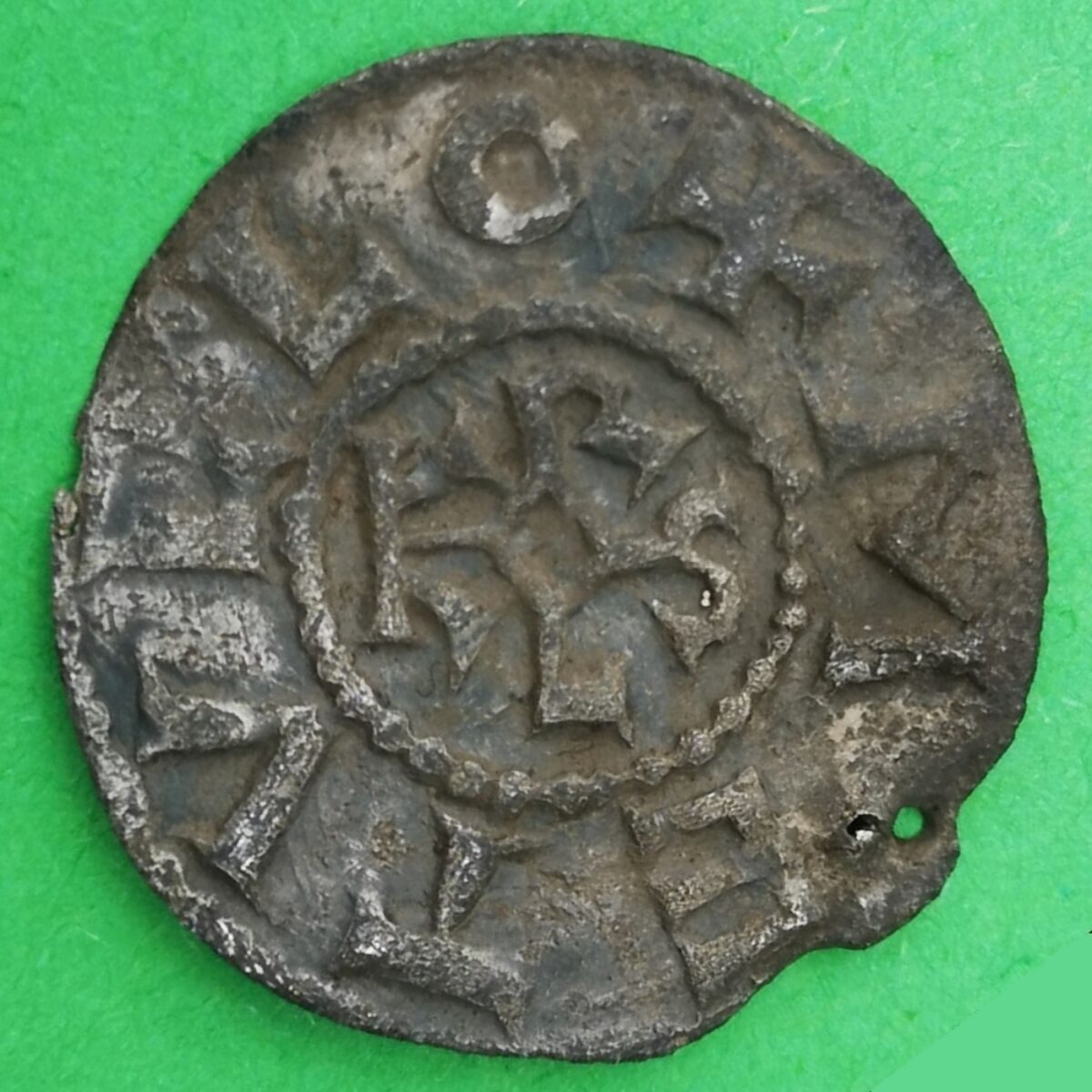
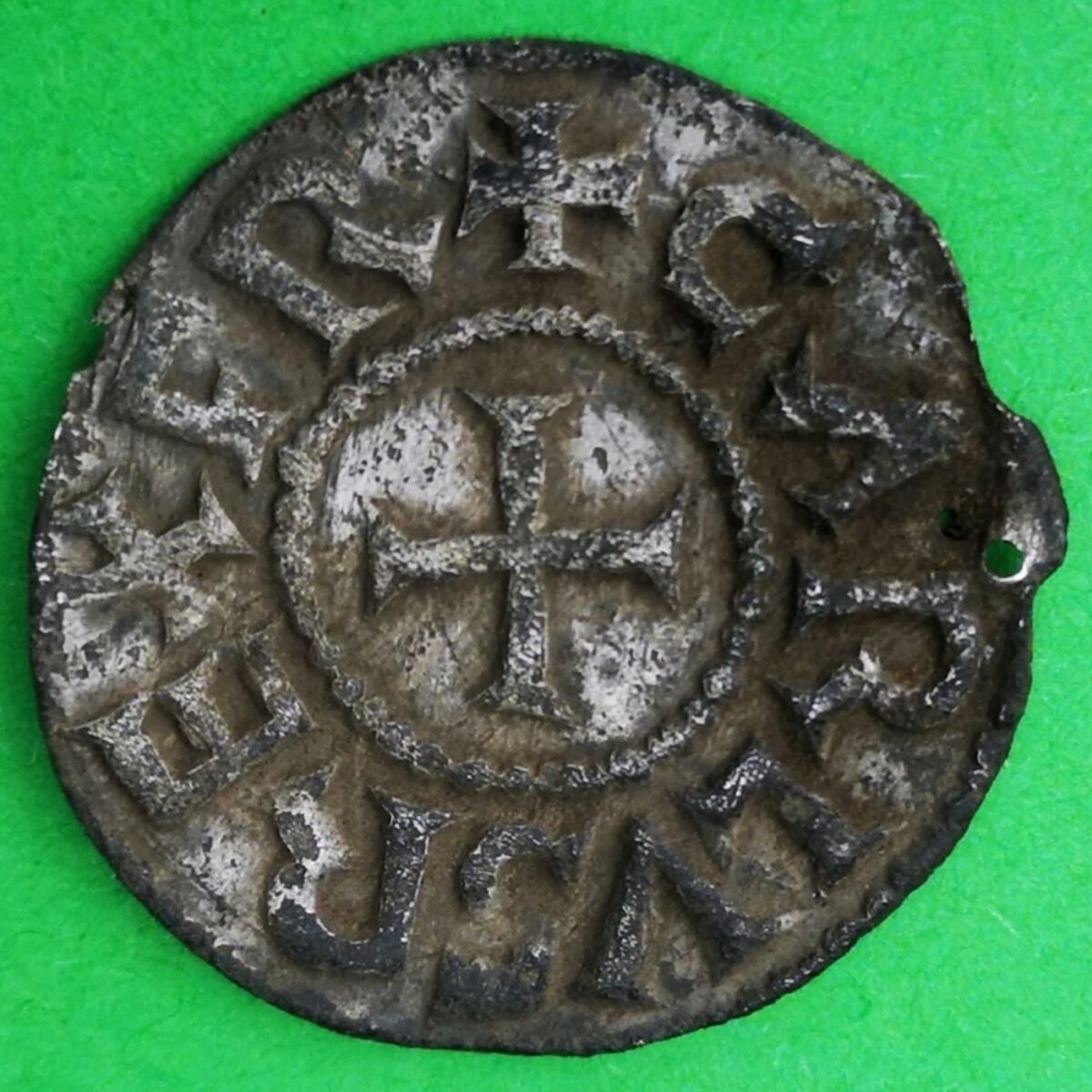
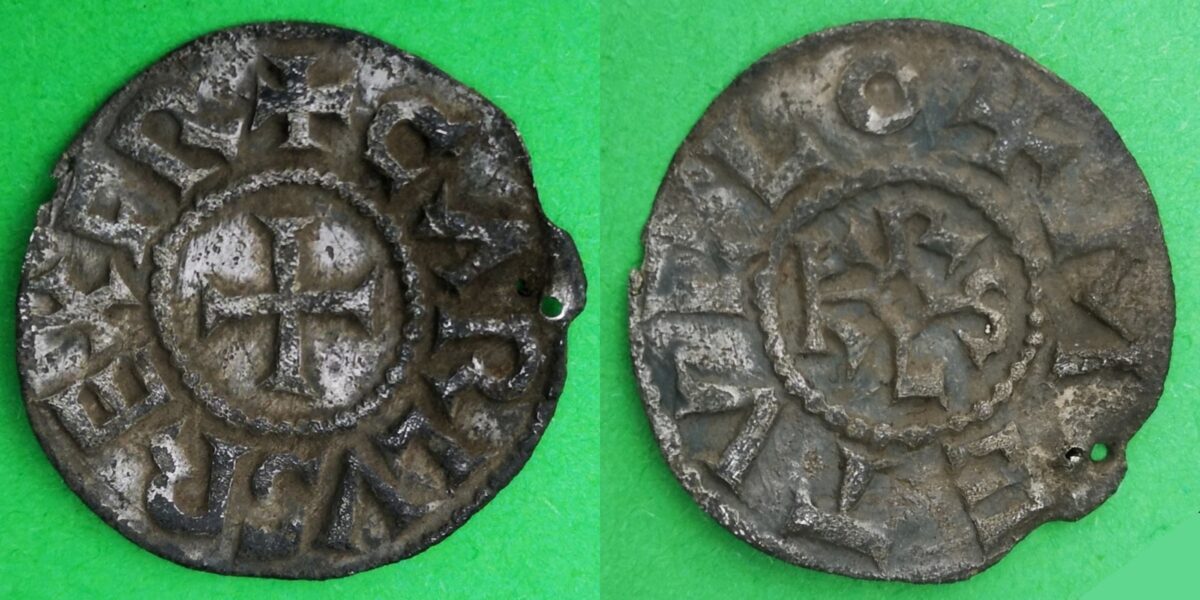
Beskrivelse: Karolingisk denar Årstall: 793-814 eller 840-864 Myntherre: Karl den store / Karl den skallede Tittel: Konger (768-814 / 840-877) Land: Frankerriket / Vestfrankerriket Myntsted: Melle Materiale: Sølv - 950‰ Diameter: 20 mm Vekt: 1,43 gram Advers: ✠ CΛRLVS REX FR Revers: ✠ METVLLO Annen info: Perforert Funnet av: Terje Staale Sande Dato: 17-09-2020 Fylke: Innlandet Kommune: Stange Type terreng: Dyrket mark Innlevert til: FA InnlandetDetaljer:
Funnopplysninger:
jmp-2015-melle-coinage-simon-coupland.pdf
Denne typen denar fra Melle med teksten ✠ CARLVS REX FR og ✠ METVLLO
er preget under Karl den store og Karl den skallede. De er identiske,
så det er ikke mulig å vite hvem av de som er myntherre ved løsfunn som dette uten annen kontekst.
Les mer i vedlagt PDF av Simon Coupland
One of the reasons for this is that Melle was the site of the only known
Frankish silver mine in the eighth and ninth centuries, and as a result its mint
was one of the most productive, if not the most productive, in the empire. A
second reason is that this METVLLO type was minted by two different rulers
over two lengthy periods, namely by Charlemagne (768-814) during the production
of his monogram type between 793 and 814, and by Charles the Bald
(840-877) between 840 and circa 864 . As we shall see below, stylistically
there is no way of attributing coins to one ruler or the other, nor is there
any discernible difference in metrology, nor, as Guillaume Sarah’s research has
shown, can coins of the two rulers be distinguished by metallurgical analysis..
An unfortunate result of these facts is that unless these
Melle coins are found in a securely datable context such as a hoard or an archaeological
stratum, it is currently impossible to attribute them to either reign.
There is a similar problem with the oboles (half-deniers) of the same type, bearing
the reverse design of the mint name METVLLO, but on the obverse the royal
monogram KRLS filling the field